Tracer gas leak detection
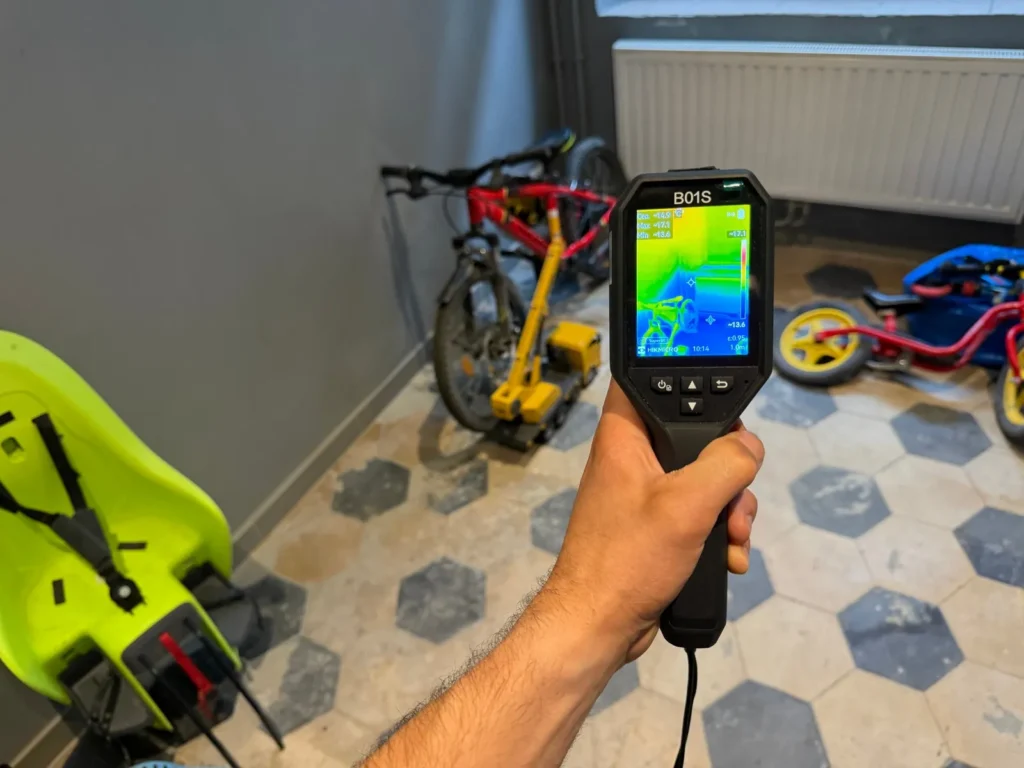
When a leak can be neither seen nor heard, a tracer gas gives it away. Injected into the pipe, it rises through the smallest defect and is detected on the surface, to within a few centimetres.
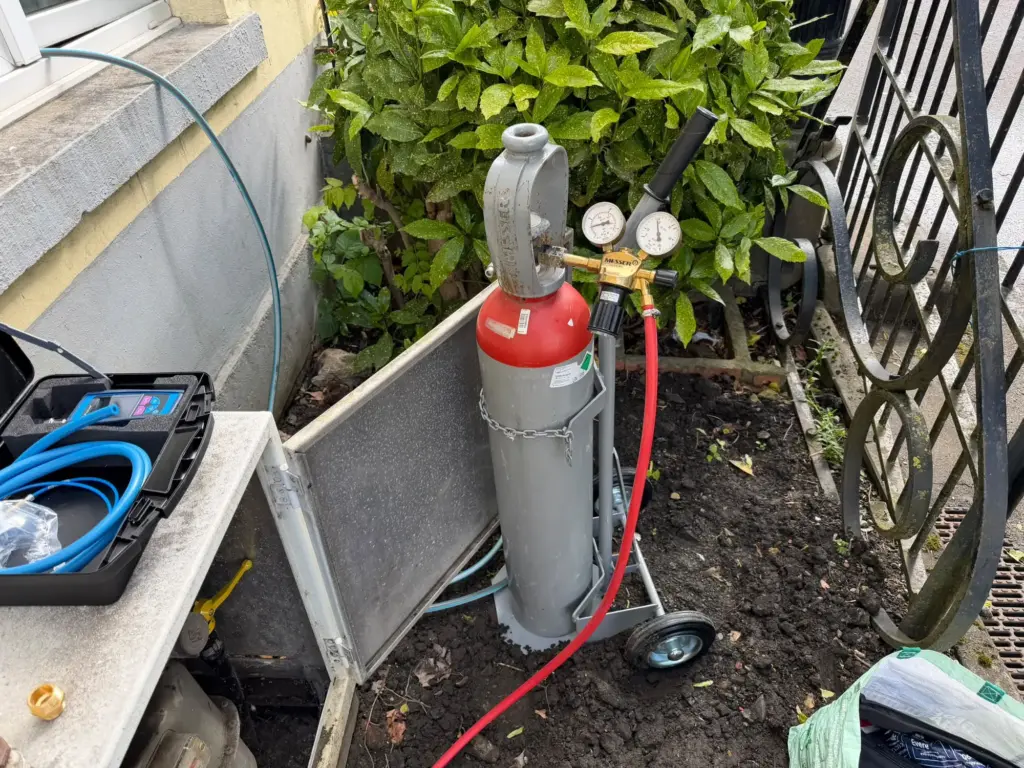
✓ H5 gas: 95% nitrogen and 5% hydrogen
✓ Ideal for pinhole leaks in heating and underfloor heating
✓ Detected on the surface with professional equipment
Brussels · Flemish Brabant · Walloon Brabant
Tracer gas leak detection: when do you need it?
Heating system losing pressure
The circuit slowly empties with no visible leak.
Suspect underfloor heating
A pinhole leak under tiles or screed that is hard to find otherwise.
Concealed or buried pipe
A network that cannot be reached without opening the floor or wall.
Flat roof that leaks
Water appears far from the real point of entry under the membrane.
How it works
01
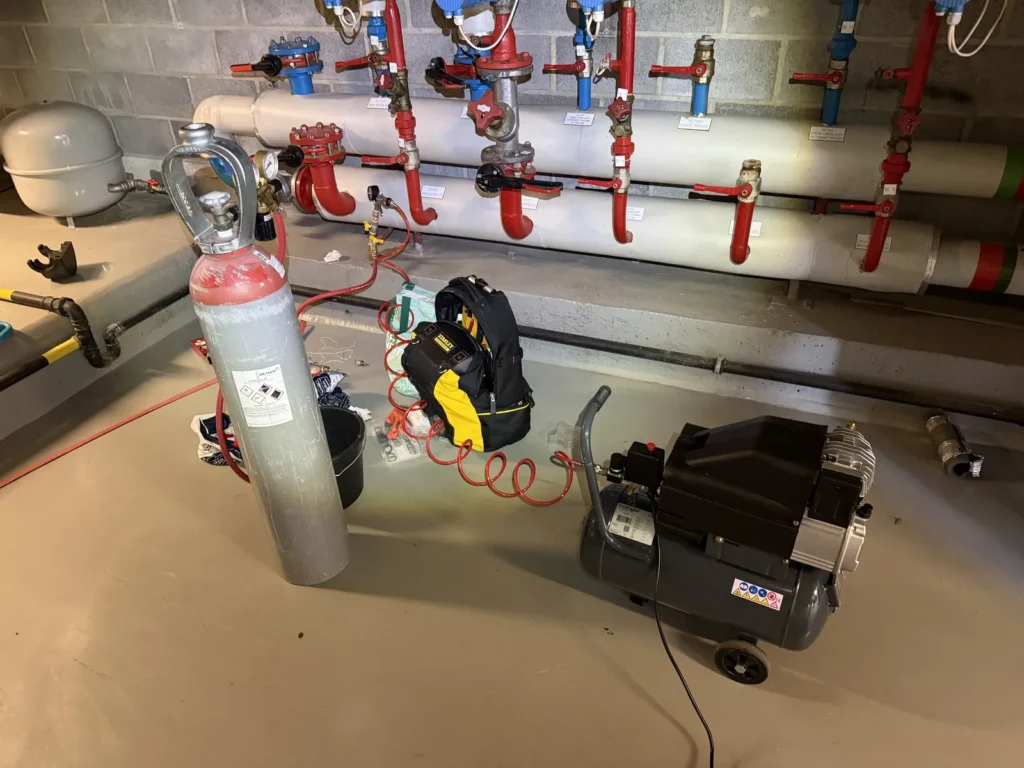
Preliminary pressure test
We first check that the circuit really does lose pressure.
02
Isolating the network
The pipe concerned is isolated and, if needed, drained.
03
Injecting H5 gas
The mixture is injected at controlled pressure. Lighter than air, hydrogen looks for the way out.
04
Surface detection
A sensitive detector follows the gas up through soil, concrete or tiles and marks the leak point.
What we detect
Why choose AXPRO
Centimetre accuracy
The gas escapes exactly at the defect: we open there, and only there.
Effective on pinhole leaks
Losses too small to see or hear become detectable.
No harm to the system
The circuit is tested with nitrogen and hydrogen, with no extra water.
Frequently asked questions
Is tracer gas dangerous?
The H5 mixture (95% nitrogen, 5% hydrogen) is commonly used for these searches and is considered harmless at the concentrations used. We always inform occupants and follow safety guidelines.
Does tracer gas require breaking anything?
No. The gas rises through the materials and is detected on the surface. We only open once the leak is located.
Why a pressure test first?
It confirms the circuit really loses pressure, so we do not inject gas for nothing.
What installations is it suitable for?
Plumbing, heating, underfloor heating and, in some cases, gas pipes that have been made safe beforehand.