Thermal imaging leak detection
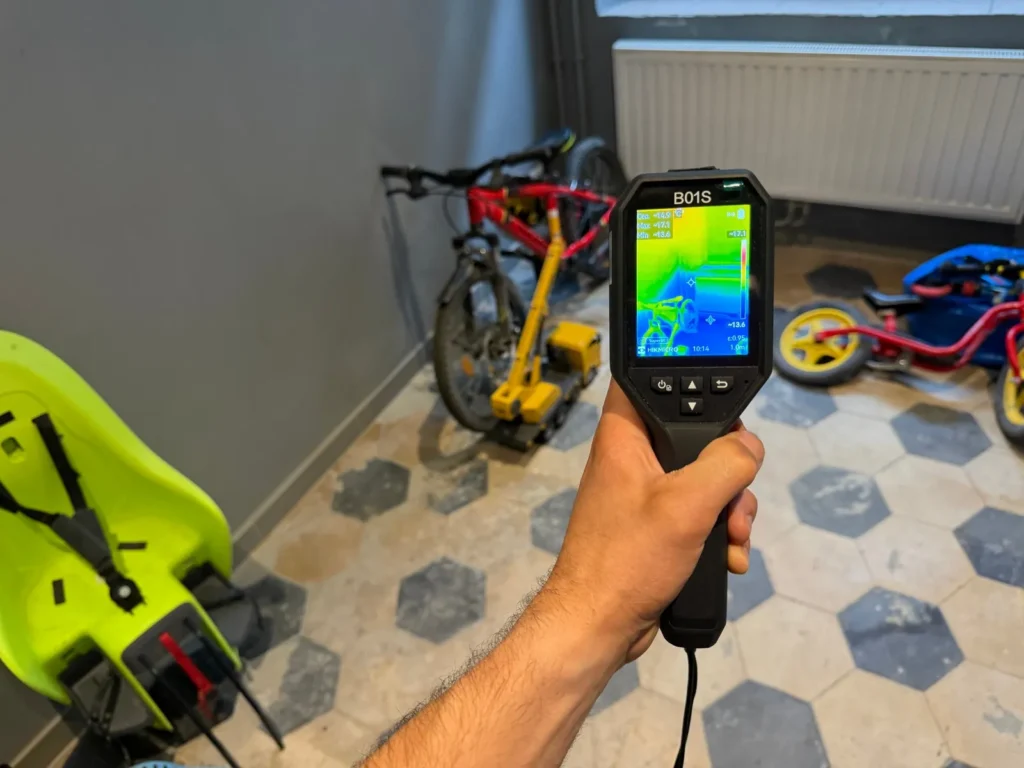
A thermal camera reveals temperature differences hidden behind a wall, floor or ceiling. It points the search in the right direction within minutes, without opening anything up. It relies on thermography.
✓ Inspection of walls, floors and ceilings without breaking anything
✓ Cold, hot and damp zones identified
✓ Anomalies confirmed with complementary measurements
Brussels · Flemish Brabant · Walloon Brabant
Thermal imaging leak detection: when do you need it?
Cold or damp area on a wall
A surface that stays cold to the touch or marks up after rain.
Underfloor heating that heats poorly
A zone that stays cold can signal a leak on the circuit.
Damp on the ceiling
A stain that spreads when nobody knows where the water comes from.
Heating pipework to trace
See where concealed pipes run before drilling or opening.
How it works
01
Thermal scan
We sweep walls, floors and ceilings with the camera to spot temperature differences.
02
Reading the image
A cold zone points to a cold-water leak or water ingress; a warm one to a hot-water pipe or heating.
03
Confirmation
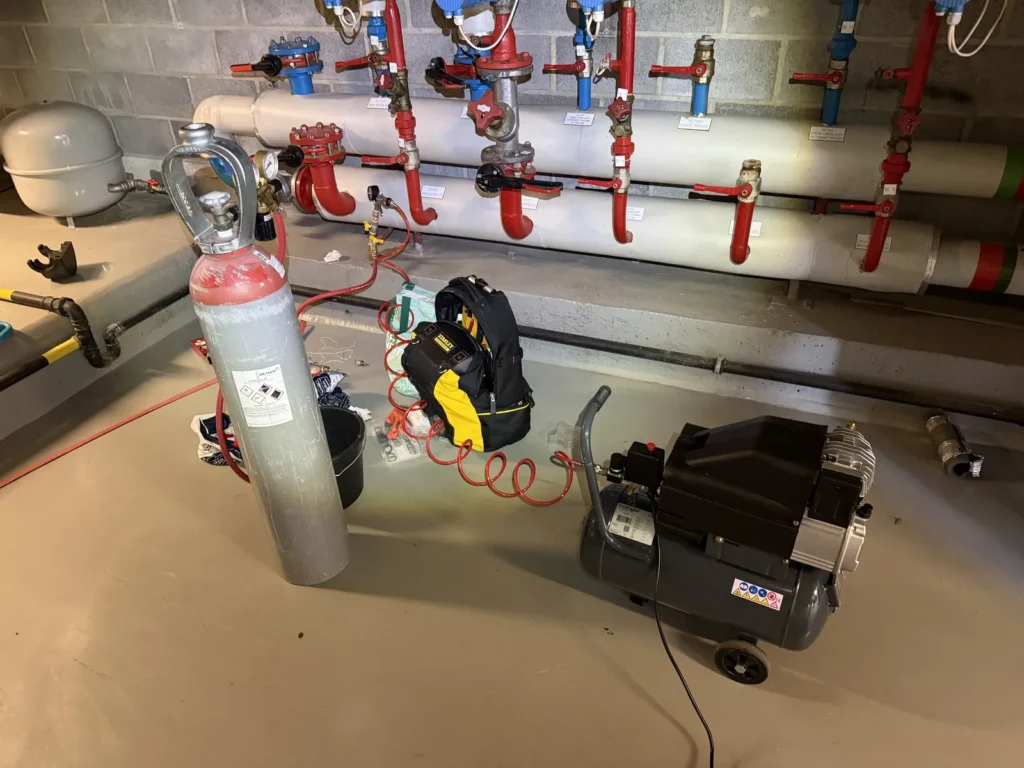
Moisture meter, pressure test, acoustic search or tracer gas: the anomaly is verified before any conclusion.
04
Marking and feedback
The likely zone is marked and the thermal images are explained.
What we detect
Why choose AXPRO
Fast and contactless
A first reading in minutes, with no drilling or dismantling.
Interpreted by a technician
An image alone proves nothing: we tell a leak from a thermal bridge or a draught.
Combined with other methods
Results are cross-checked to narrow the zone and avoid wide demolition.
Frequently asked questions
Can a thermal camera see through walls?
No. It measures surface temperature. It is the temperature difference caused by water or a pipe that reveals what is happening behind.
Does a cold zone always mean a leak?
No. A thermal bridge, a draught, an insulation defect or a different material can produce the same effect. That is why we confirm with additional measurements.
What surfaces does thermography work on?
Walls, floors and ceilings, as well as some concealed heating networks, depending on materials and conditions.
Does the heating need to be on?
Sometimes, to better visualise a heating system or underfloor heating. We will tell you before the visit.